


Inside the Gilded Age Grandeur of Wentworth Mansion®
There are historic homes you visit in Charleston, admiring their architecture from the sidewalk or stepping inside for a glimpse of another era. And then there are the rare places where history becomes something you can actually inhabit.
At Wentworth Mansion®, guests wake beneath soaring ceilings, pass through rooms illuminated by Tiffany stained glass, gather beside hand-carved marble fireplaces, and climb to a rooftop cupola overlooking Charleston’s church steeples.
These details are beautiful. But what makes them remarkable is that nearly 140 years after the Mansion was built, so much of its original craftsmanship remains—and guests are invited to experience it as a home once again.
A Grand Charleston Home, Built in 1886
Wentworth Mansion® was built in 1886 as the private residence of Francis Silas Rodgers and his family, during an era when Charleston’s grandest homes were expressions of both craftsmanship and permanence.
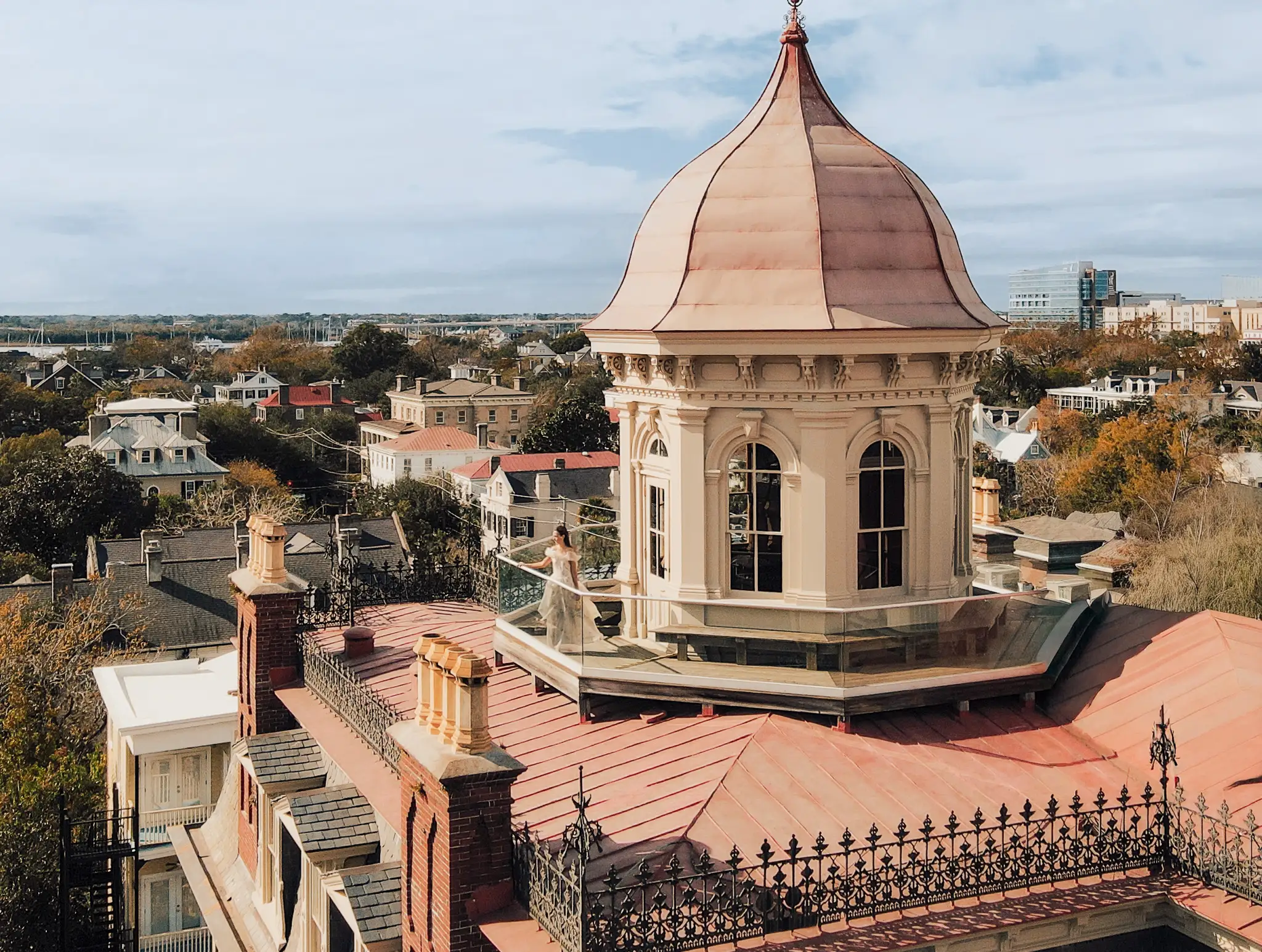
The four-story residence was designed in the Second Empire style, distinguished by its mansard roof and the rooftop cupola that still rises above the Mansion today.
The cupola may have been more than an architectural flourish.
Rodgers had served on the Charleston City Council and was instrumental in the city’s efforts to establish a municipal fire department. According to the history shared in Hotels ByDesign, the height of the Mansion and its cupola would have allowed it to serve as a private fire watch at a time when only a handful existed throughout Charleston.
Today, its purpose is decidedly more leisurely.
Guests can walk up to the cupola and take in a remarkable 360-degree view across the Charleston peninsula. From this vantage point—one of the highest in the city—13 church steeples can be seen rising above the rooftops, offering a particularly memorable perspective on the city long known as the Holy City.
Craftsmanship That Could Rarely Be Recreated Today
Step inside Wentworth Mansion® and the scale of the house immediately makes an impression. Look more closely, however, and its craftsmanship begins to reveal itself in quieter ways.
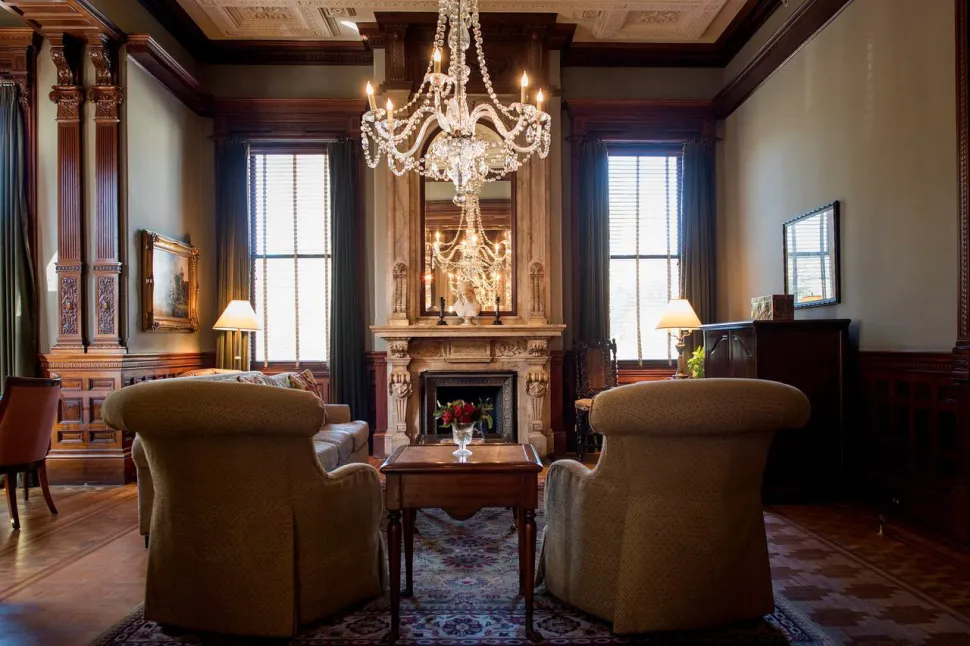
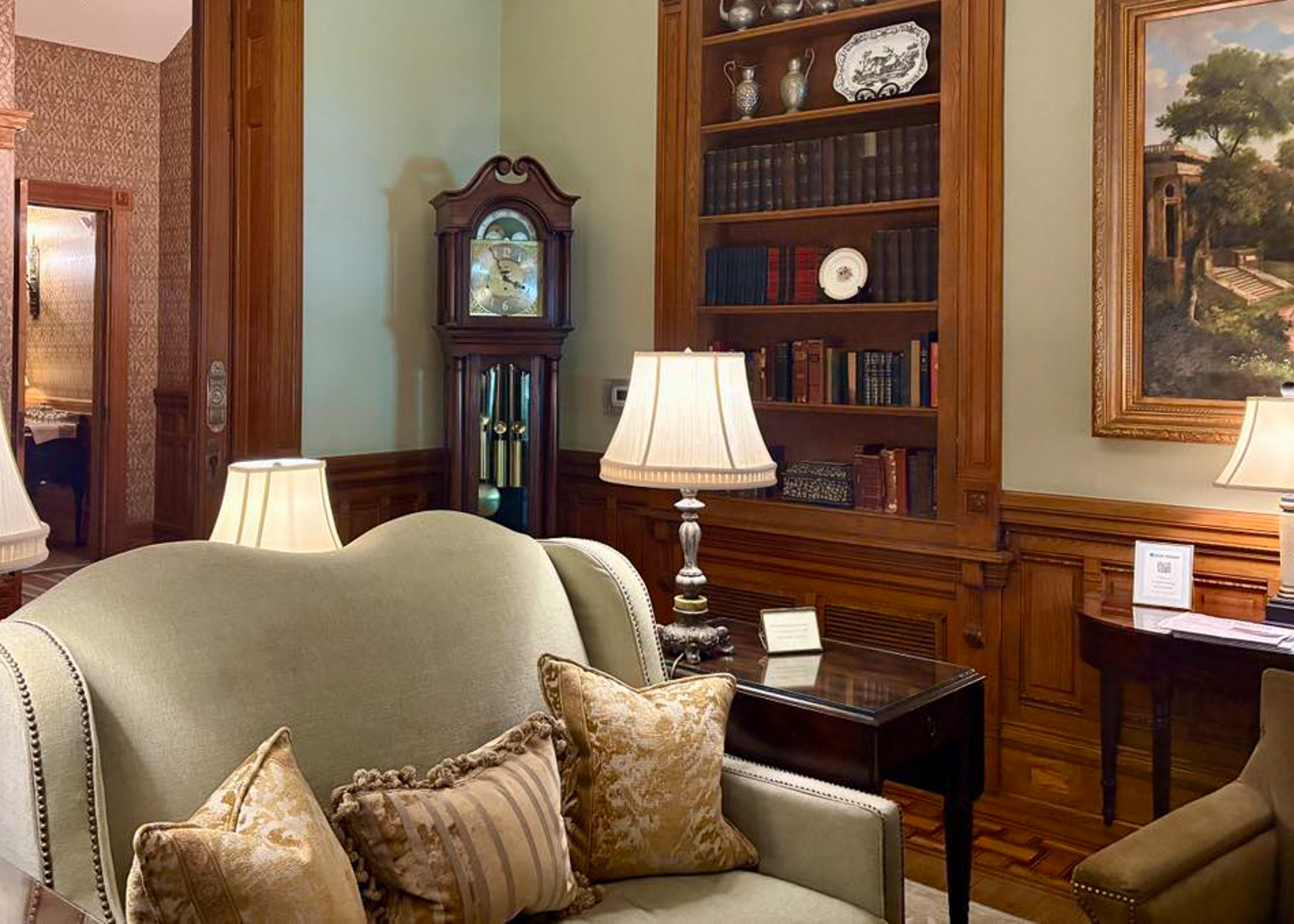
Intricate plaster ceilings were shaped by hand. Marble mantels were carved onsite. Tiffany stained glass filters Charleston sunlight into the rooms, while floor-to-ceiling pocket doors and original hardware offer reminders of the extraordinary attention once given to even the most functional details of a home.
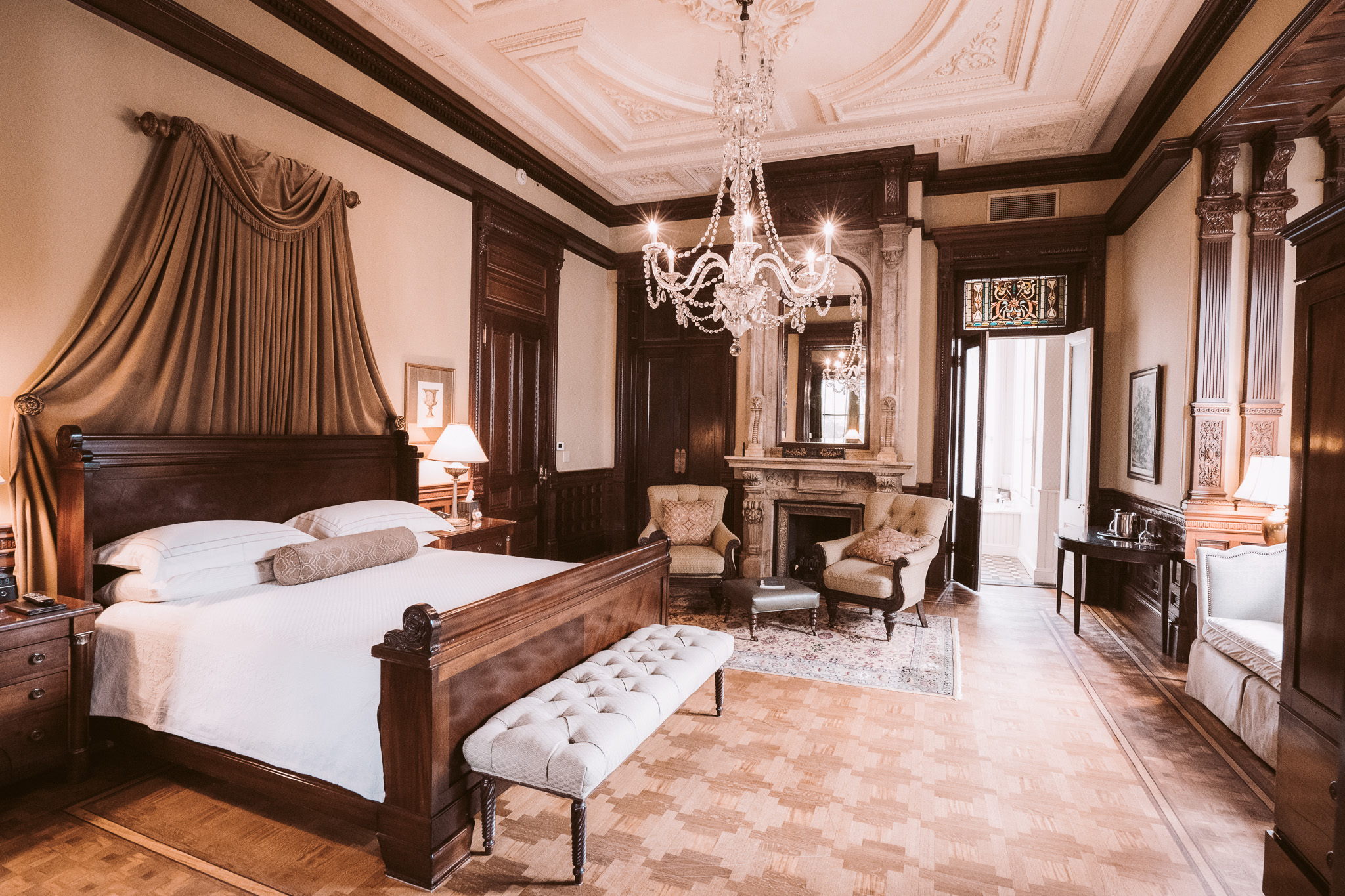
In the Grand Mansion Suite, two original Italian chandeliers still hang overhead alongside two floor-to-ceiling gas fireplaces and original Tiffany glass.
These aren’t decorative references to the past added later to create atmosphere. They are pieces of the house’s original story.
And remarkably, some survived because of decisions made decades after the Rodgers family left the house.
The History Hidden Above the Ceiling
In 1940, Atlantic Coast Life purchased the Mansion for use as office space.
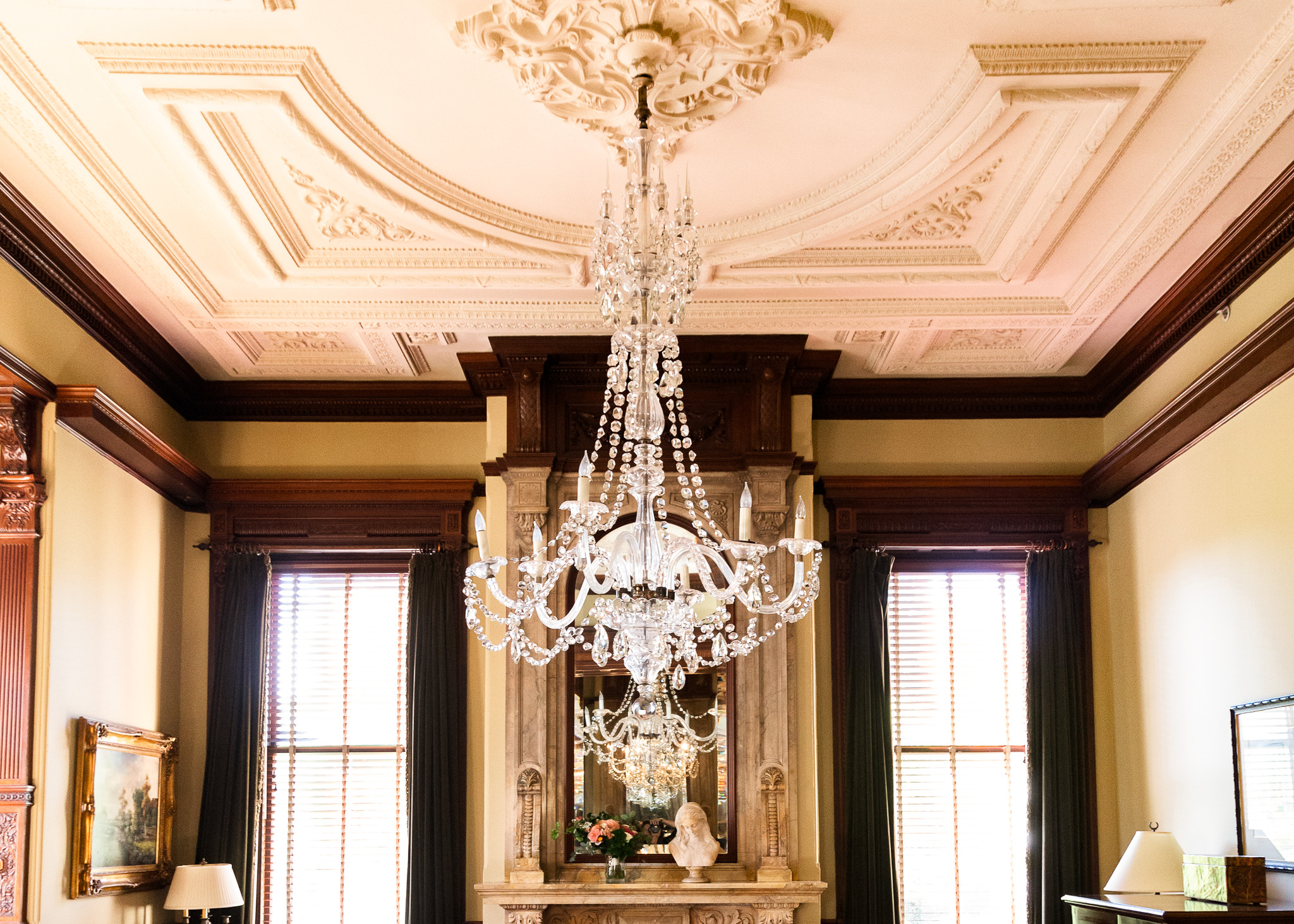
The building needed modern air conditioning, but rather than cutting into its elaborate plaster ceilings to accommodate the new systems, suspended ceilings were installed below them.
For decades, much of the original plasterwork remained hidden overhead.
When the Mansion was eventually restored, those ceilings were still there.
Preserving a nineteenth-century residence for a new life as a hotel required far more than uncovering what had survived. Modern fire sprinklers, electrical wiring, plumbing, and other necessities had to be incorporated into a building created long before anyone could have imagined them.
The challenge was to introduce those comforts without erasing the character that made the house worth saving in the first place.
One unexpected chapter in the building’s history helped make that possible.
Creating Modern Comfort Without Losing the Past
At some point during the Mansion’s years as office space, its piazzas had been enclosed to create additional offices.
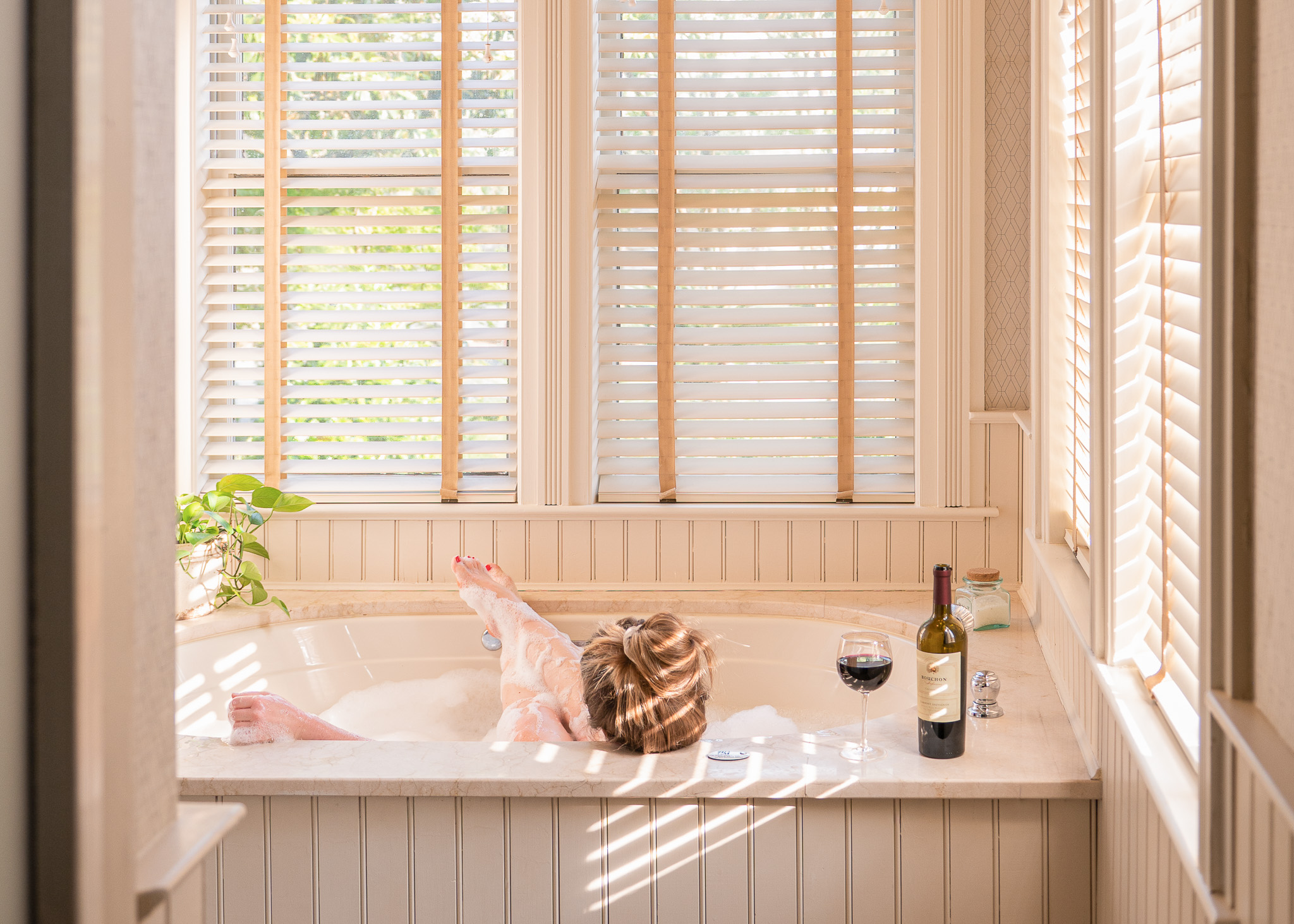
During the property’s transformation into Wentworth Mansion®, those enclosed spaces presented an unusual opportunity. Rather than carving bathrooms out of the historic rooms themselves—a common challenge when adapting old residences for modern hospitality—the former piazza spaces could be transformed into spacious bathrooms.
It meant the proportions and architectural integrity of many of the Mansion’s original rooms could remain.
That balance between preservation and thoughtful adaptation can still be felt throughout Wentworth Mansion® today. Modern comforts are present, but they rarely announce themselves. Instead, the architecture remains the backdrop to the experience.
A Home Filled With Generations of Stories
Preserving Wentworth Mansion® has also meant preserving pieces of the family who first called it home.
Several furnishings belonging to the Rodgers family remain within the Mansion alongside heirlooms from the family responsible for restoring and caring for the property today.
The result feels less like a collection assembled to recreate a historical period and more like what the Mansion has always been: a home shaped by generations.
That distinction matters.
Historic architecture can sometimes feel precious and untouchable. At Wentworth Mansion®, guests are encouraged to settle into it.
With just 21 guestrooms and suites, the scale remains intimate. Mornings begin with breakfast at Circa 1886 Restaurant, housed in the Mansion’s original carriage house. Afternoons unfold over tea and lemonade. In the evening, guests gather for wine and hors d’oeuvres before heading to dinner or climbing upstairs to watch the last light move across Charleston’s rooftops.
These rituals bring life back into rooms built for exactly that purpose: gathering, conversation, and the everyday pleasures of being at home.
The View From the Cupola
Perhaps nowhere does the Mansion’s past and present converge quite like the rooftop cupola.
What may once have served as a watchful vantage point over nineteenth-century Charleston has become one of the property’s most beloved guest experiences.
The climb leads above the mansard roof to sweeping views in every direction. Church steeples punctuate the skyline. Historic rooftops stretch toward Charleston Harbor. As the afternoon fades into evening, the changing light reveals a city whose architecture tells centuries of stories.
From here, the Mansion itself becomes part of that landscape.
And perhaps that is what makes preserving places like Wentworth Mansion® so meaningful.
Charleston has no shortage of beautiful historic buildings. But at Wentworth, history isn’t something viewed only from a sidewalk, studied in a book, or admired from behind a velvet rope.
You can wake up inside it.
You can notice sunlight passing through Tiffany glass. Walk beneath chandeliers that illuminated the house generations ago. Gather beside marble fireplaces carved for a family in 1886. And climb to the same rooftop that has looked out over Charleston for nearly 140 years.
Wentworth Mansion® is grand by virtue of its architecture.
But it remains extraordinary because that architecture is still alive.